

How it all started
Our pottery story began 3 generations ago with potter and craftswoman Kathleen and her son Frits, a renowned master potter whose work was commissioned by the artist Arthur Boyd and selected for the Victorian State Craft Collection.
Now Frits’s daughter Kate, with other family members, continues the tradition from her small studio in rural NSW.
in the studio…
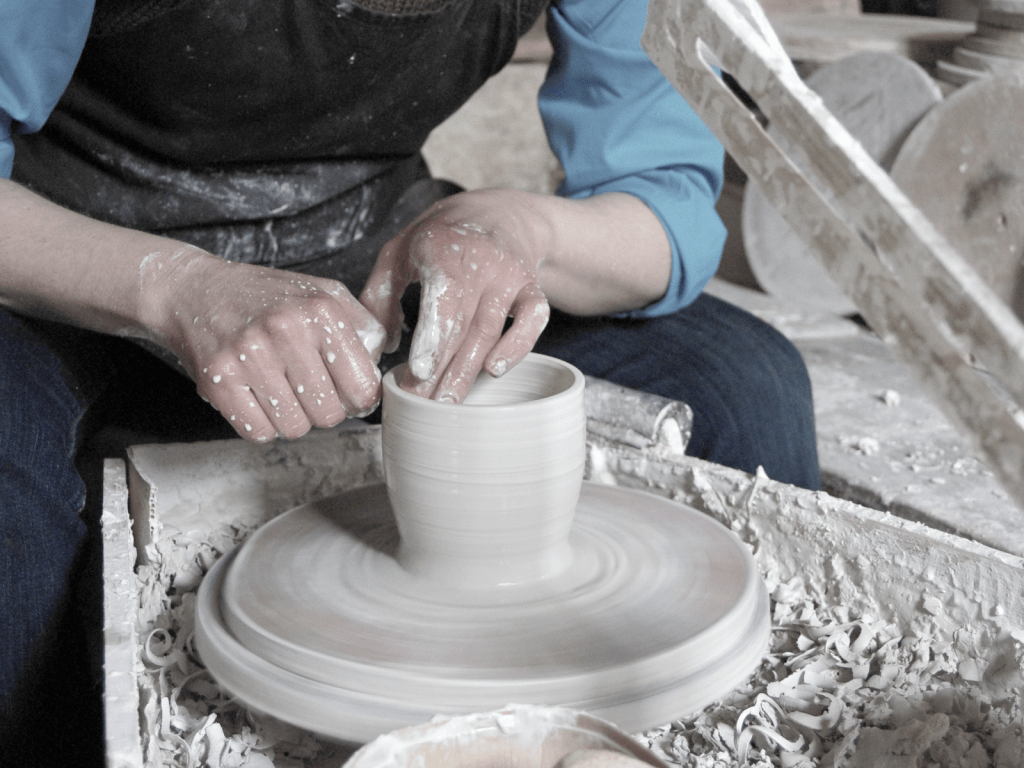
We use traditional, time-honoured wheel-throwing and handbuilding techniques to produce our small-batch artisan ceramics.
Ideas for our pottery seem to grow naturally out of the experiences of everyday family life, and the beautiful but challenging landscape of the Riverina Murray region.
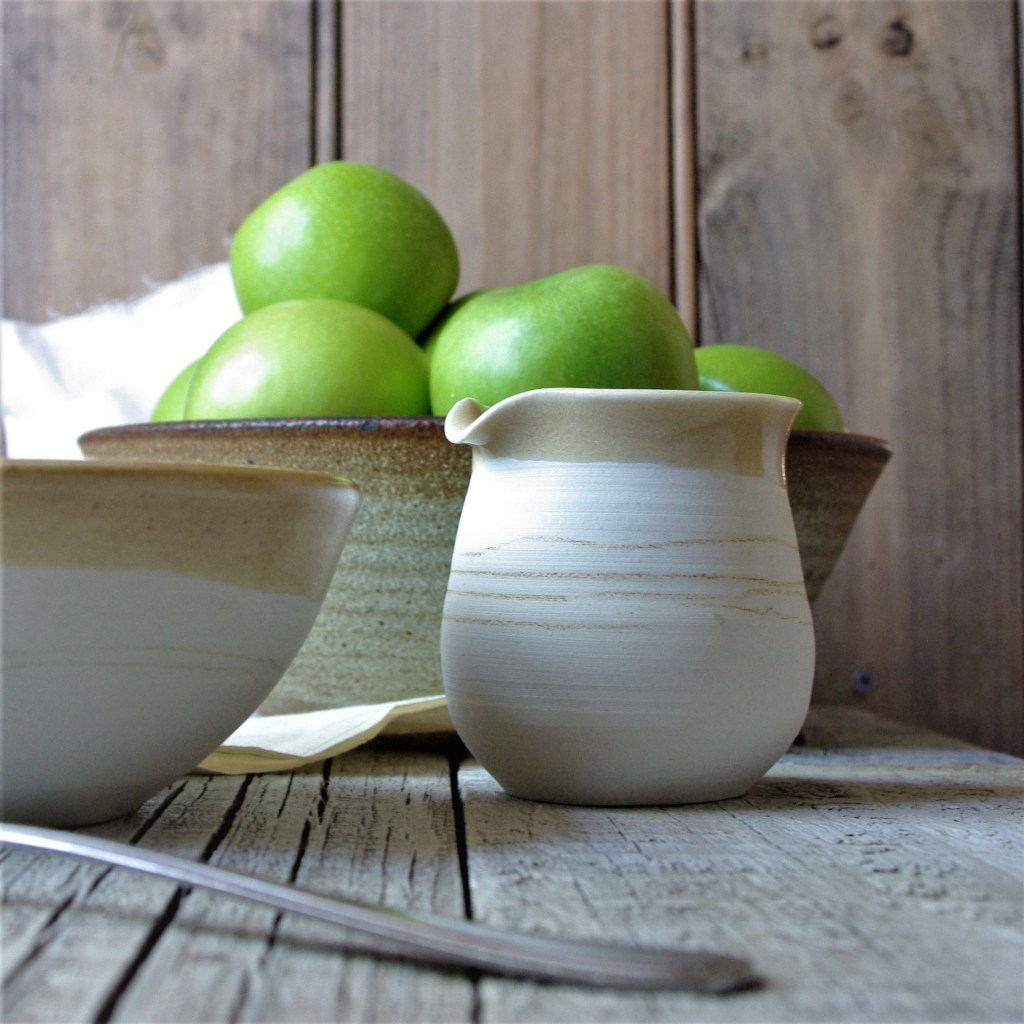


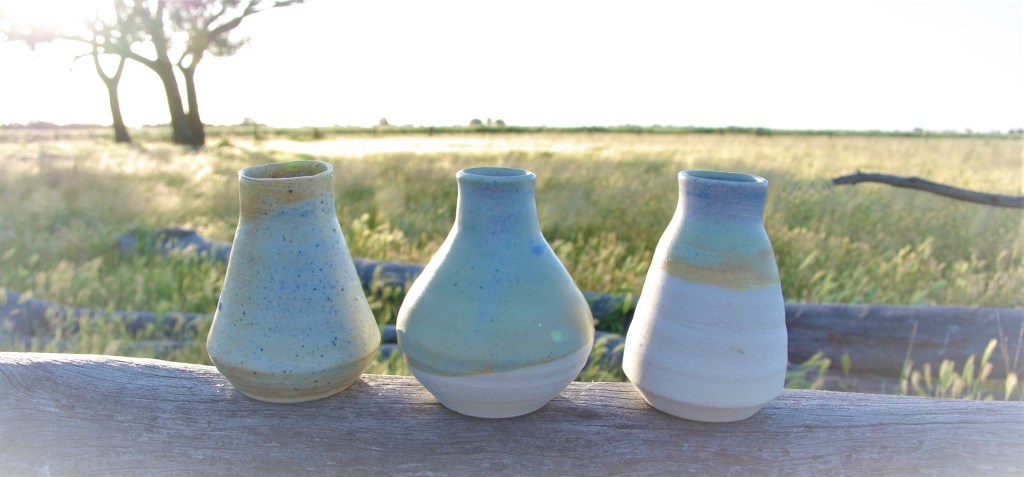
When someone brings in a bunch of flowers from the garden, or picks the first apples from our fruit trees, ideas for a new vase or bowl may emerge. And family business meetings (a.k.a a long morning tea!) are fuelled by hot coffee from a favourite mug. Our own pots are always on the table, being tested and critiqued and enjoyed!
earth and fire
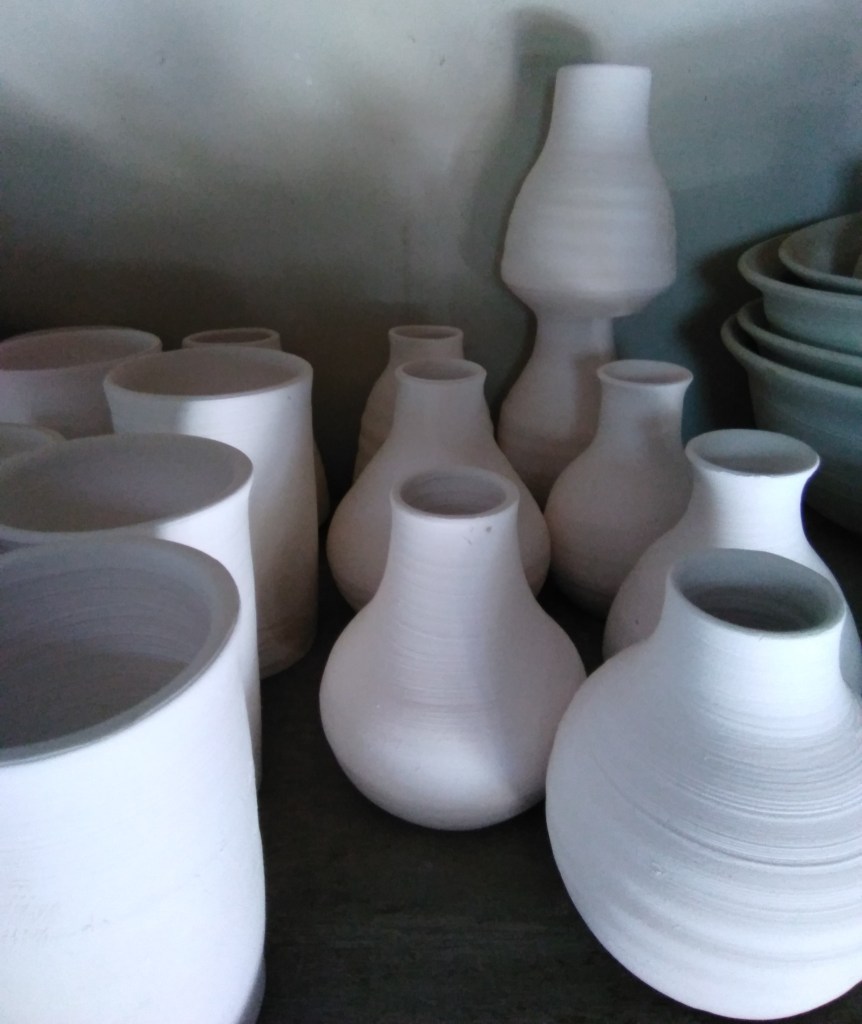
After the pots have been made (“thrown”) on the pottery wheel, the wet clay must fully dry. Then they’re carefully placed in either our gas or electric kiln for their their first firing (a low-temperature ‘biscuit’ or ‘bisque’ firing. After this they’re rather brittle and porous, but strong and water-resistant enough to dip into a bucket of liquid glaze. Finally, after glazing, they’re placed in the kiln again, for the final (‘glost’) firing, which lasts many hours and reaches very high temperatures of up to 1300°C. During this firing, stoneware clay develops a glass-like or vitrified structure (though it’s not transparent like glass of course!). This process means that stoneware pottery (unlike earthenware or terracotta ware) has very low porosity and is hard and durable.
Making good pottery takes time, skill and just a little dash of luck! We always look forward to opening the kiln the day after a glaze firing. It’s an exciting, almost magical process of transformation. Sure, there’s the occasional disappointment – a crack, a blemish, a glaze that didn’t perform as expected. But that’s all part of the creative process. Plans for the next firing are adjusted and new ideas and opportunities discussed!

 Womboota Artisan Pottery